
The digital transformation of healthcare is failing, and skills are the reason.
Healthcare organizations have invested hundreds of billions in digital infrastructure. Yet 49% of healthcare CEOs report that their digital transformation investments have not delivered the expected benefits. Only 14% of healthcare workers report advanced digital skills. Three-quarters lack proficiency with generative AI. Even among Gen Z healthcare workers, 69% feel underprepared for digitally driven roles.
This white paper presents the evidence base, a segmented workforce typology, and the Wordsburg Digital Readiness Framework, a structured approach to closing the gap in ways that are clinically sensitive, operationally realistic, and measurably effective.
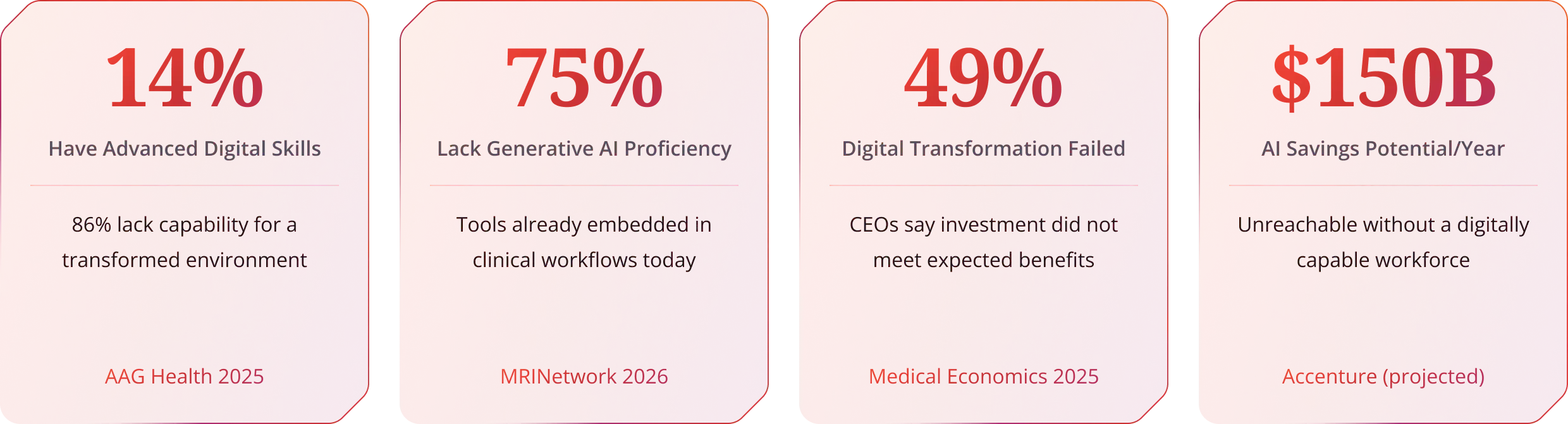
Key statistics: The scale of the healthcare digital skills crisis in 2026

Key Findings
| Theme | Finding | Stat | Source |
|---|---|---|---|
| Skills Gap | Healthcare workers with advanced digital skills | 14% | MRINetwork, 2026 |
| Skills Gap | Healthcare workers lacking generative AI proficiency | 75% | MRINetwork, 2026 |
| Skills Gap | Average time to fill AI roles in healthcare | 6 to 7 months | IDC, 2026 |
| Transformation Gap | Healthcare CEOs reporting digital transformation underdelivered | 49% | |
| Transformation Gap | EHR implementations failing to meet original objectives | 50 to 70% | |
| Transformation Gap | EHR implementations rated successful | 38% | KLAS, 2025 |
| Cost of Inaction | Projected global losses from AI skills gaps by 2026 | $5.5 trillion | IDC |
| Cost of Inaction | Potential annual healthcare savings from AI applications | $150 billion | Accenture |
Digital Readiness
A System Built for Yesterday, Staffed for the Day Before
Healthcare has never moved slowly in clinical innovation. Digital transformation is different.